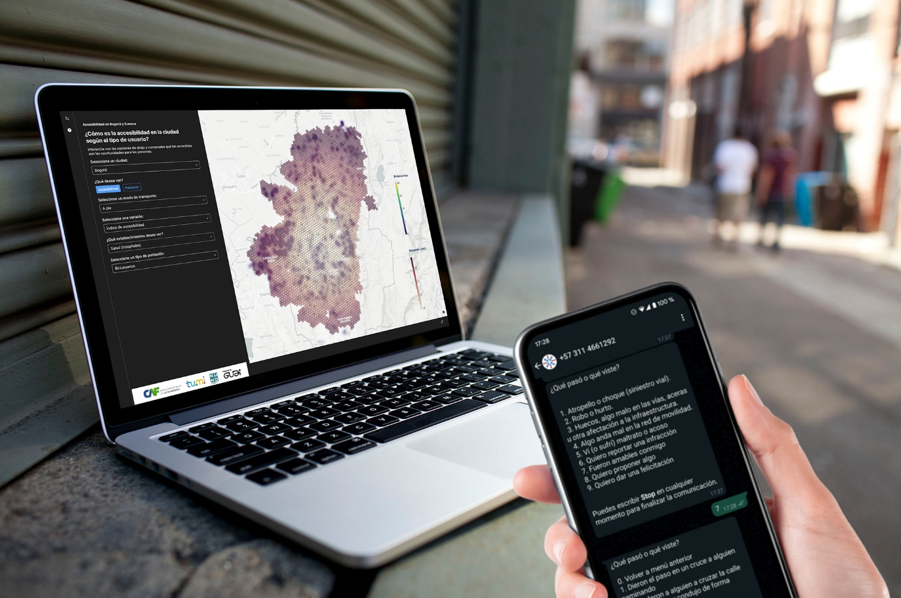
Digital tools and Artificial Intelligence are no longer a distant prospect for transport planning – they are already part of everyday practice in many places around the world. But how far has this shift actually progressed? What data are planners realistically working with, which digital and AI applications have moved beyond the pilot stage, and where are the real barriers to scaling them up?
These are the questions behind our new global survey, Data, Digital Solutions & AI in Transport Planning, which we are launching together with our partner network of public authorities, engineering consultancies, and research institutions.
Why we’re doing this
AI and digital tools are everywhere right now. Every conference has a panel on it, every strategy paper mentions it, and most organizations have at least started experimenting with it in some form. But between the panels and the pilot projects, one basic question is surprisingly hard to answer: what is actually happening on the ground?
Transport planning is, at its core, an entirely data-driven discipline – good decisions depend on good data, whether that’s counting vehicles, modelling demand, or evaluating the impact of a new bus corridor. Yet many cities and agencies are working under exactly the opposite conditions: data scarcity, patchy quality, and systems that don’t talk to each other. That tension – a field that runs on data, operating in environments where data is often missing, outdated, or locked in incompatible formats – is precisely where digital tools and AI are supposed to help. But does that promise hold up in practice, or does it just add another layer of complexity on top of problems that were never solved in the first place?
We hear a lot of individual stories – one city trying out an AI-supported forecasting tool here, a consultancy automating a data-cleaning step there – but very little that adds up to a global picture. What data are transport planners really working with in the day to day business? Which digital and AI applications have already moved from talk to practice, and which are still stuck at the pilot stage? What is holding organizations back – skills, budgets, data quality, interoperability, unclear rules, or something else entirely? And does any of this look different depending on where in the world you’re planning transport?
Rather than guessing or relying on anecdotes, we want to ask the people doing this work directly – across different countries, institutions, and administrative levels – and build an evidence base the whole sector can use.
What we hope to learn
Through the survey, we want to build a clearer, evidence-based picture of:
- What data is actually available and used in transport planning today – not just in theory, but in day-to-day practice
- How digital tools and AI solutions are being applied, and in which stages of the planning process
- Which application areas are most relevant globally – from traffic forecasting to public engagement
- The key opportunities, barriers, and success factors that shape whether digital and AI adoption succeeds or stalls
The results will help us map global maturity levels, identify distinct “innovation profiles”, and highlight where targeted support – training, tools, or guidance – could make the biggest difference for the future of transport planning.
How you can help
We’re inviting public authorities, engineering consultancies, and research institutions involved in transport planning to take part – and to share the survey with counterparts at local, national, and regional levels. The more perspectives we gather, the more useful and representative the results will be.
Take the survey: www.askallo.com/s/data_ai_transport_planning
Deadline: 5 August
Help us build a clearer, global understanding of where digital and AI-driven transport planning stands today – and where it can go from here.