Did you know that Home office share is one of the most misleading indicators in transport planning? #MobilityIndicators
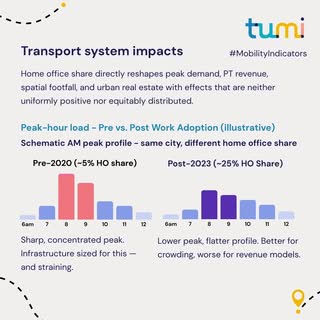
Home office share is one of the most misleading indicators in transport planning right now — it sounds like progress, it makes a tidy headline, and everyone assumes higher is better. But a single percentage conceals everything that matters: who gets to stay home, whose “remote work” is actually productivity-optimised, and who never had the option in the first place.
Here’s what the average doesn’t show you:
- The manager or academic clocking nearly 50% home office, uninterrupted, because their job and their household allow it.
- The woman working from home who isn’t experiencing focused remote work at all — she’s juggling childcare, elder care, and household management between meetings, and the aggregate statistic erases that entirely.
- The nurse, the bus driver, the cleaner, the warehouse worker who were never asked whether they’d like to work from home, because the option was never on the table.
Occupation is destiny in remote work. It tracks income, education, gender, and ethnicity almost perfectly — and it decides who benefits from reduced peak crowding and whose commute gets harder as transit agencies chase a shrinking farebox.
Home office share is where labour policy, gender equity, and transport planning either collaborate or cancel each other out.