Trainings & E-Learning
Cities for All: The ABCDs of Disability Inclusion in Mobility
Around 1.3 billion people in the world live with some form of disability – that is around 1 in 6 people. Disability is part of everyday life in every city, where more than half of the global population with disabilities live. Yet mobility systems around the world continue to exclude them from daily life.
Even where legal frameworks, policies, or accessibility standards exist, cities often still struggle to treat accessibility as an integral component of transportation,treating it instead as a special intervention, an add-on. As a result, there remains a persistent gap between what is promised in policy and what people actually experience on the ground.
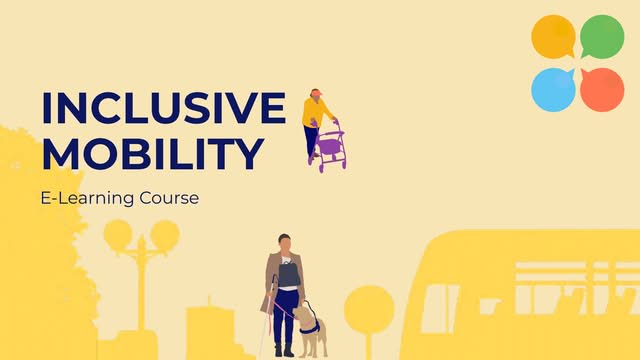
This course seeks to respond directly to that gap by helping urban and transport practitioners and advocates understand inclusive transport as both an essential enabler to meeting basic needs and participating in civic, social, and economic life and a systems change in how we provide for mobility and accessibility for all. Specifically, the course is designed to help cities move from policy to practice: from broad commitments around disability inclusion and accessibility to the tools, behavior changes, and actions needed to make transport systems: walking, wheeling and transit access, work for everyone.
The course is intended to provide a clearer entry point into universal accessibility and disability-inclusive mobility. It will offer a mix of awareness-building materials, practical tools, and implementation examples to help participants understand both why accessibility matters and how it can be integrated into everyday planning and decision-making.
This course will draw from global case studies, stories and examples from persons with disabilities, short multimedia formats, and applied tools that can help participants assess their own local conditions and identify possible actions. The course will use accessible digital learning formats to support learners with diverse disabilities and needs. This includes visuals with alt text and captions, videos with transcripts, readable visuals, and clearly structured content.
What is this course about?
How can we design inclusive mobility? What do we need to consider when planning? How can we make transportation systems more sustainable and accessible for everyone? We’ll address these and other questions in this course.
Who is the course for?
Whether you’re an urban planner, transportation planner, government agency, ministry, or just someone interested – everyone is welcome to join!
Where can I join the course?
This course will be hosted on the learning platform atingi.
Teaching Format:
Digital
Starting Date:
Any Time
Duration:
5 weeks
Language:
English

Organizer