
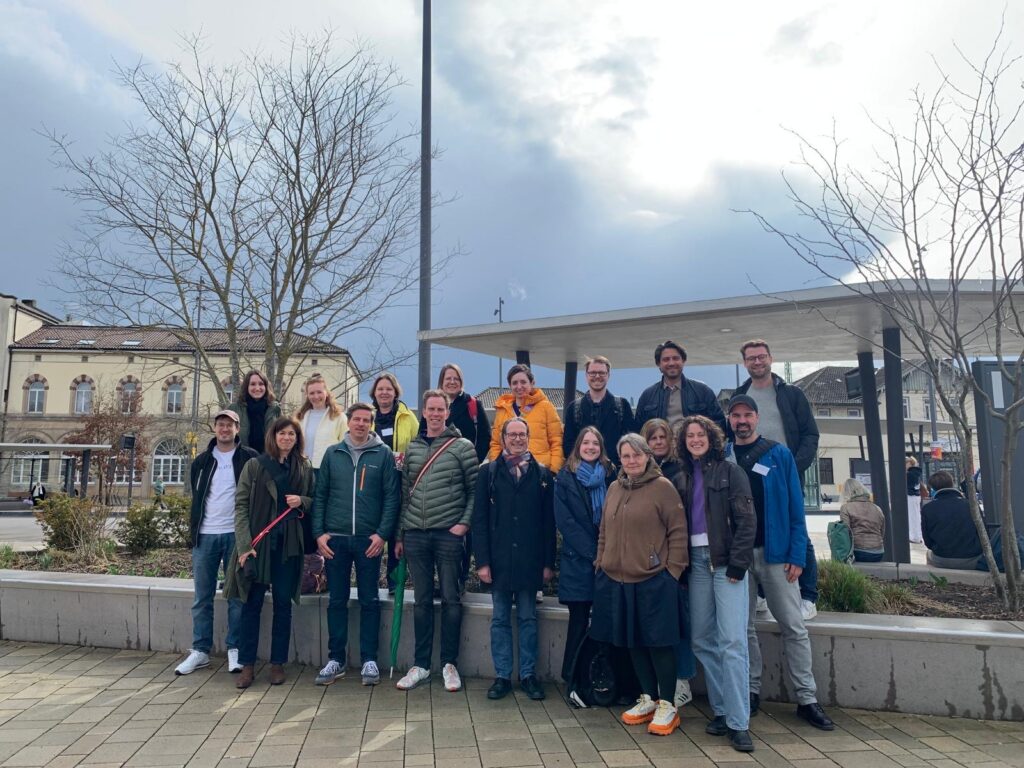
How do you develop a complex station area into a lively urban district? In order to open up new perspectives for the Freising district of the future, the IBA-M initiated and organised a field trip to Tübingen and Esslingen. The trip provided valuable impulses from practice and showed how integrated planned station districts can look in reality – a glimpse into a possible future of Freising’s station environment, so to speak.
© City of Freising
In many cities and municipalities, train stations are central places. If they are planned wisely and with foresight, they offer enormous potential for transformation: Attractive and lively districts can be created from mere mobility hubs – with public meeting places, green spaces and daily amenities that are also excellently connected and make multimodal mobility tangible. Tübingen and Esslingen are examples of municipalities that have recognised the potential of their stations and developed their station areas into inner-city centres. The IBA-M project candidate “Freising Future District” also wants to leverage this development potential: a new urban district is to be created around Freising railway station, which is planned cooperatively and thinks mobility, neighbourhood development and landscape together.
Learning together in the peer-to-peer format of IBA-M
The IBA-M sees itself as a platform for the joint and interdisciplinary development of future-oriented mobility solutions. A central component of this approach is the exchange between municipalities, disciplines and practitioners who face similar challenges. In the spirit of “togetherness”, the IBA-M therefore initiated a field trip to Tübingen and Esslingen together with the city of Freising. The excursion was professionally and organizationally accompanied by the office bgh. Gauly & Volgmann GbR and Dr. Katrin Korth, Project Manager Europaplatz Tübingen.
“We don’t have to reinvent the wheel every time. Many of the challenges facing cities today are similar. That’s exactly why we should learn much more from each other and actively share experiences. The IBA-M sees itself as a driver of active knowledge transfer. There are already so many good solutions – we need to make them more visible and think ahead together. In this way, we can build on existing approaches, develop them further in a context-related manner and use them to develop new, innovative solutions for our project candidates.” ~ Prof. Dr. Oliver Weigel, Managing Director of IBA-M
The excursion not only made it possible to experience transformation projects that have already been implemented, but also opened up a concrete view of possible future prospects for the Freising station area. Such peer-to-peer formats are a central component of the qualification of IBA-M project candidates on their way to high-quality and forward-looking IBA-M projects. Solutions should not be developed in isolation, but should be further developed together in dialogue between cities, specialist disciplines and practitioners.
Right next to the action: Examples from Tübingen
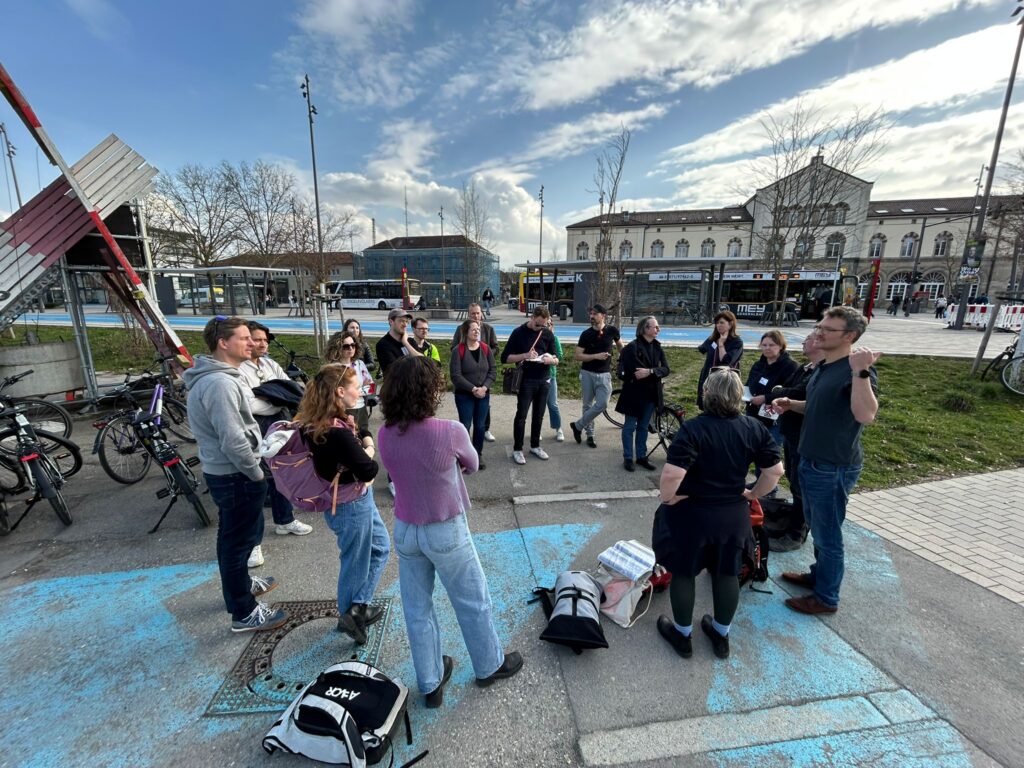
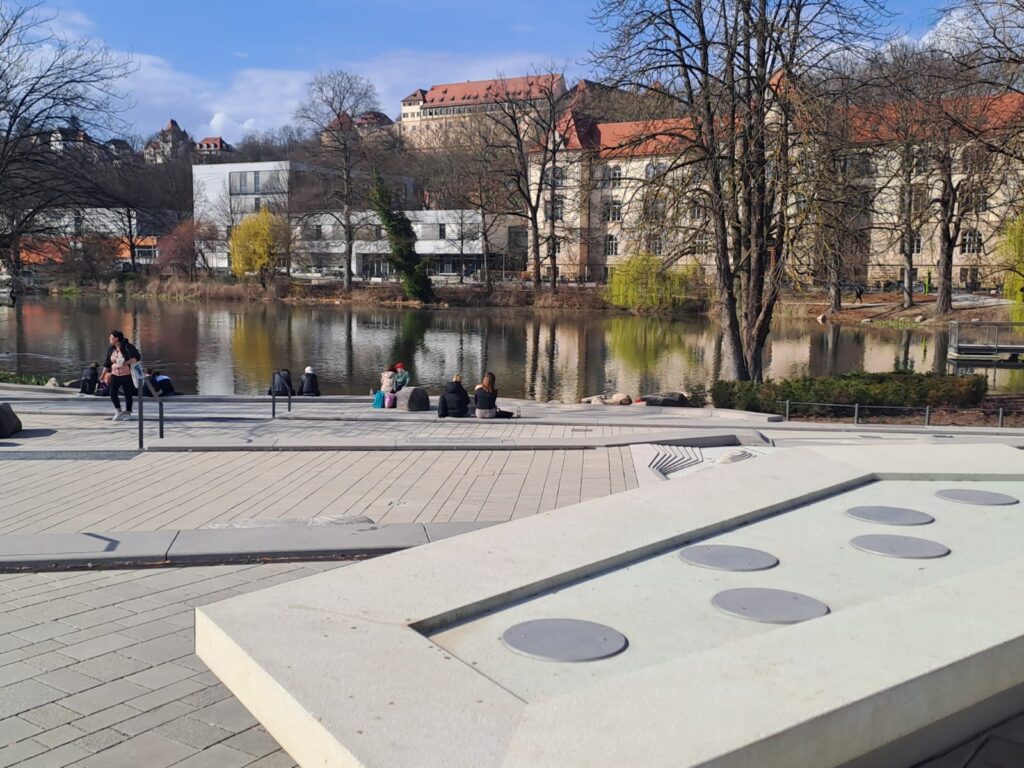
With around 40,000 passers-by every day, Europaplatz at Tübingen Central Station is the most important transport hub in the university city. With the conversion, the aging central bus station was reorganized, distances were shortened and existing areas and buildings were upgraded. At the same time, new green parking areas were integrated and connected to the adjacent city park and lake. Today, mobility, open space and quality of stay are naturally intertwined and shape the place far beyond its transport function.
With the new Europaplatz, Tübingen has created a lively place where mobility and encounter come together. Today, the main station and its surroundings are not only the central transport hub of Tübingen, but also a public space to linger and feel good.” ~ Dr. Katrin Korth, Project Manager Europaplatz Tübingen
The “Alter Güterbahnhof” quarter south of the railway line has developed from a fallow area into a lively urban district. Where there used to be old tracks and ruins, there are now modern apartments with communal courtyards. Living, working and social services are closely linked and provide a lot of life in everyday life. Green open spaces, solar roofs and diverse buildings give the quarter its own face.

“Neue Weststadt” and Neckaruferpark in Esslingen
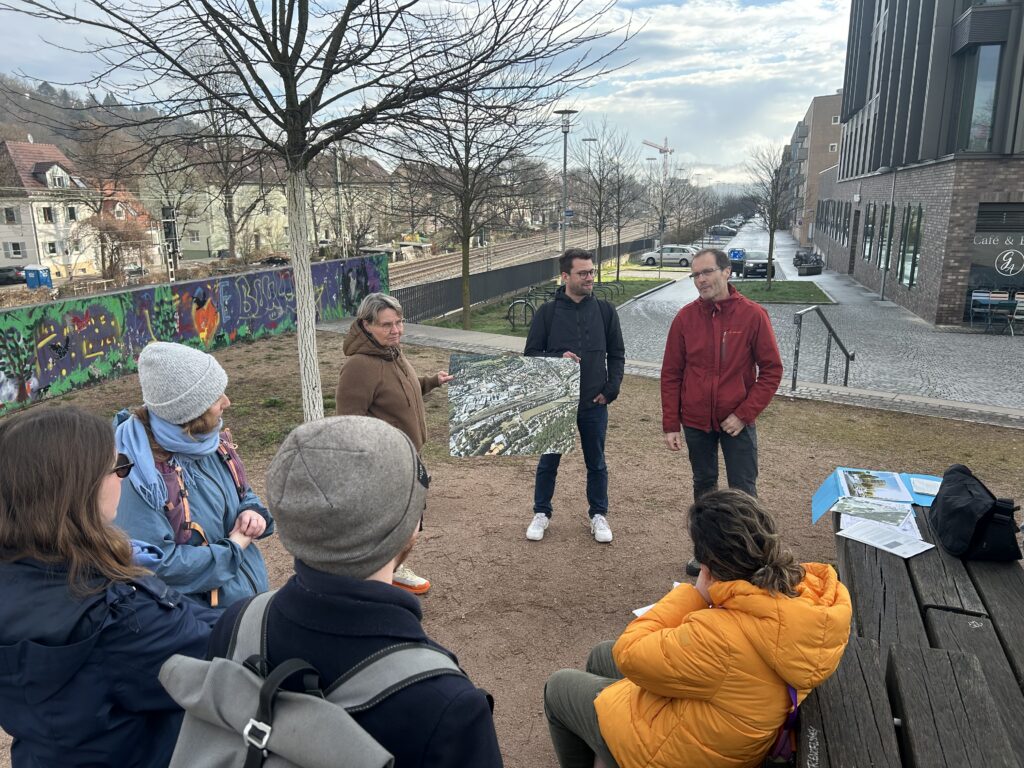
The Neue Weststadt in Esslingen transforms a former industrial area into a modern, networked urban district. The future-oriented energy concept with hydrogen technology, which gives the area model character, is particularly formative. The development is divided into several independent building plots, which were designed by different teams. The future university location will also bring young life to the district.
The Neckaruferpark complements the Neue Weststadt with a long, narrow green space between the railway tracks and the Neckar. Since 2023, a continuous park with new places to spend time and play areas has been built on the former railway site. Clear paths for pedestrians and cyclists create a direct connection along the Neckar and make the bank usable continuously for the first time. A city balcony opens up the view of the water and creates a transition to the city centre.
Parallels to Freising’s Future Quarter
Tübingen’s Europaplatz is particularly interesting for the Zukunftsquartier Freising, because the starting point in both cities is very similar: the city centre and neighbouring districts are cut up by the railway tracks. Both stations border on green and recreational areas. In both places, a large number of usage requirements and at the same time very complex ownership structures come together in a very confined space. Europaplatz is an example of how integrated planning and high design quality can create a place that is a mobility hub, urban space and point of identification at the same time.
Key findings for the city of Freising
The excursion translated central questions from Freising into concrete spatial situations in Tübingen and Esslingen. For the Zukunftsquartier Freising, the impressions provided important food for thought for the further development of its own station environment – for example, for the reorganisation of traffic, the linking of mobility, urban and landscape space and how to deal with competing usage claims.
In addition, it became clear how crucial a clear target image and reliable framework conditions are in order to enable flexible adjustments in the process. At the same time, an approach is needed in which open space, mobility and urban structure are thought together from the outset. These principles also form a central basis for the Zukunftsquartier Freising in the IBA-M process. Building on these findings, the focus is now on the next steps in the IBA-M process – with the aim of gradually translating the common mission statements into concrete spatial solutions for the Freising district of the future.
“The underlying recipe for success of the responsible colleagues in Tübingen: Allow openness, but set clear framework conditions in order to control complexity and remain capable of acting.” ~ Jonas Bellingrodt, Project Manager Zukunftsquartier Freising