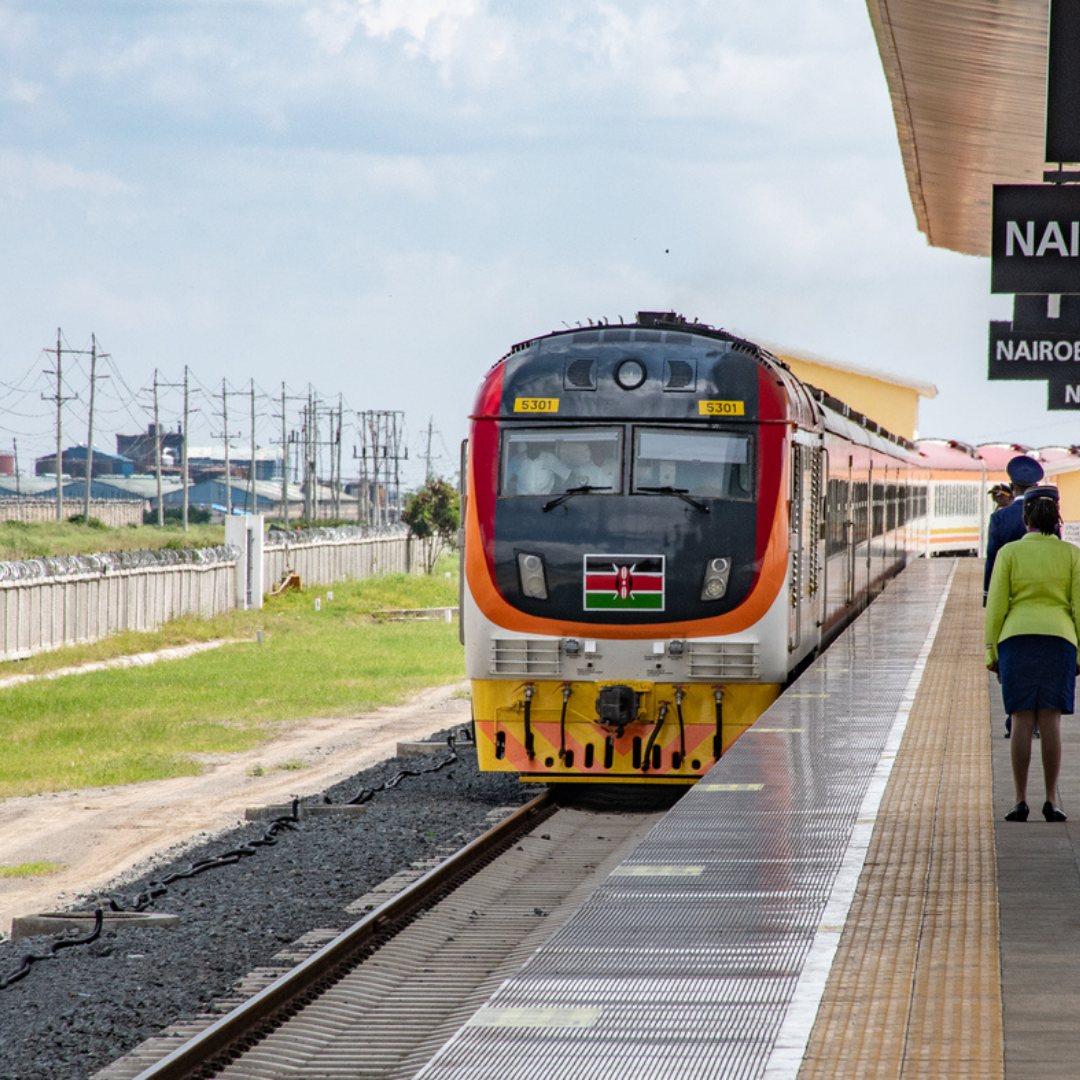
With the Trans-European Transport Network (TEN-T), Europe has demonstrated that interoperable, well-managed networks accelerate regional integration, boost economic development, reduce logistics costs and create high-quality jobs.
TEN-T shows how standards, governance and digital interoperability reduce fragmentation and shorten the time to implementation. Rail serves as the backbone of the TEN-T strategy as it has a structural advantage when it comes to transporting large volumes reliably, cost-effectively and in a climate-friendly manner – over long distances, between hubs such as ports, cities and production sites. With the development of TEN-T railway corridors, the EU fulfils several policy goals in regard to climate, economic development, and mobility.
TEN-T pushes the adoption of the European Rail Traffic Management System (ERTMS), a single digital signalling standard (European Train Control System – ETCS) replacing over 20 national signalling systems. This allows trains to run across national borders without changing engines or crew due to signalling conflicts.
Standardizing infrastructure to handle longer 740m freight trains across European Transport Corridors significantly boosts rail capacity relative to road trucking.
TEN-T funding via the Connecting Europe Facility (CEF) has modernized transport grids in Central and Eastern Europe, integrating post-2004 Member States into Western European markets.
Technical Specifications for Interoperability (TSI) guarantee on different levels the functionality of the integrated network. In the European railway sector, TSIs are legally binding technical and operational standards set by the European Union Agency for Railways (ERA). Their main goal is to ensure that trains can travel seamlessly across borders between different European countries without facing mechanical, electrical, or signalling barriers. The African Union is currently working to define pan-African standards and regulations. Many regional authorities already have standards and regulation in place to smoothen and accelerate cross-border rail traffic i.e. the Southern African Railways Association (SARA) developed regional technical interoperability standards covering safety, wagon exchanges, and cross-border operational protocols.
Corridor development is maturing in many regions across Africa from a vision into an investment pipeline. Countries, regional organisation and the African Union have an increasing focus on infrastructure corridors for sustainable economic development, regional integration and resilient transport systems. They are looking beyond standalone projects to integrated networks that connect cities, ports, and production hubs. In this shift, rail is recognised as an important lever to move large volumes of people and goods, reduce logistics costs, and anchor inclusive, low-carbon growth. Ongoing rail developments in Africa demonstrate that standardisation and technical specifications for interoperability are key for cross-border rail operation in corridors. Adapted to local conditions, the European approach for standardisation and interoperability can serve as an example for the development of an African Integrated Railway Network.
Translating the experience from Europe to other regions is GIZ’s core strength and helps to de-risk the investments made into the corridors.
Strengthening institutional capacities: Empowering regional institutions, corridor authorities, regulatory bodies and metropolitan agencies in the areas of governance, standardisation and digital coordination.
Building implementation expertise: Complex tendering processes, data and performance management, stakeholder engagement – from concept through to operation and maintenance.
Ensuring bankability: Project pipelines with sound business cases, aligned with development finance institutions (DFIs) and private capital; a well-thought-out sequence of measures to deliver visible results at an early stage.
Political sustainability: Highlighting economic outcomes (lower logistics costs, improved accessibility, jobs) – to ensure continuity across election cycles.
Another huge advantage of rail-based corridor projects is that rail can act as a driver of employment and skills development. Rail-oriented corridors create high-quality, green jobs across the entire value chain – from planning to corridor governance, from track construction, electrification and signalling to railway operations and maintenance, from asset management to local manufacturing.
Without targeted training, a skills gap will emerge. GIZ and the African Development Bank (AfDB) are joining forces to build the crucial capacities required for accelerated corridor development – from planning through to implementation, operation and maintenance.
Together, GIZ and AfDB work on a pre-feasibility study for Rail Competence Centres in Africa. The development of competency frameworks, upgraded TVET and apprenticeship pathways, gender-inclusive recruitment policies, and continuous upskilling opportunities in areas such as signalling, electrification, digital rail and predictive maintenance are essential to close capacity gaps and ensure that rail corridors deliver long-term economic and social value.