Six municipalities, four priorities, one shared data agenda
In a two-day workshop in Cali, Colombia, 28 public officials from six municipalities turned ideas on mobility data into four concrete projects – with first terms of reference already on the table.
Built around local challenges
The agenda was developed together with CENTRARTE, the data platform of Cali’s Regional Transport Authority Movamos Región, and shaped by the challenges the region faces every day. Participants came well prepared: ahead of the training, they had completed the free online course Data Fundamentals for Sustainable Mobility by the Transport and Urban Mobility Initiative (TUMI). With this shared foundation, the group could dive straight into the region’s own data and challenges.
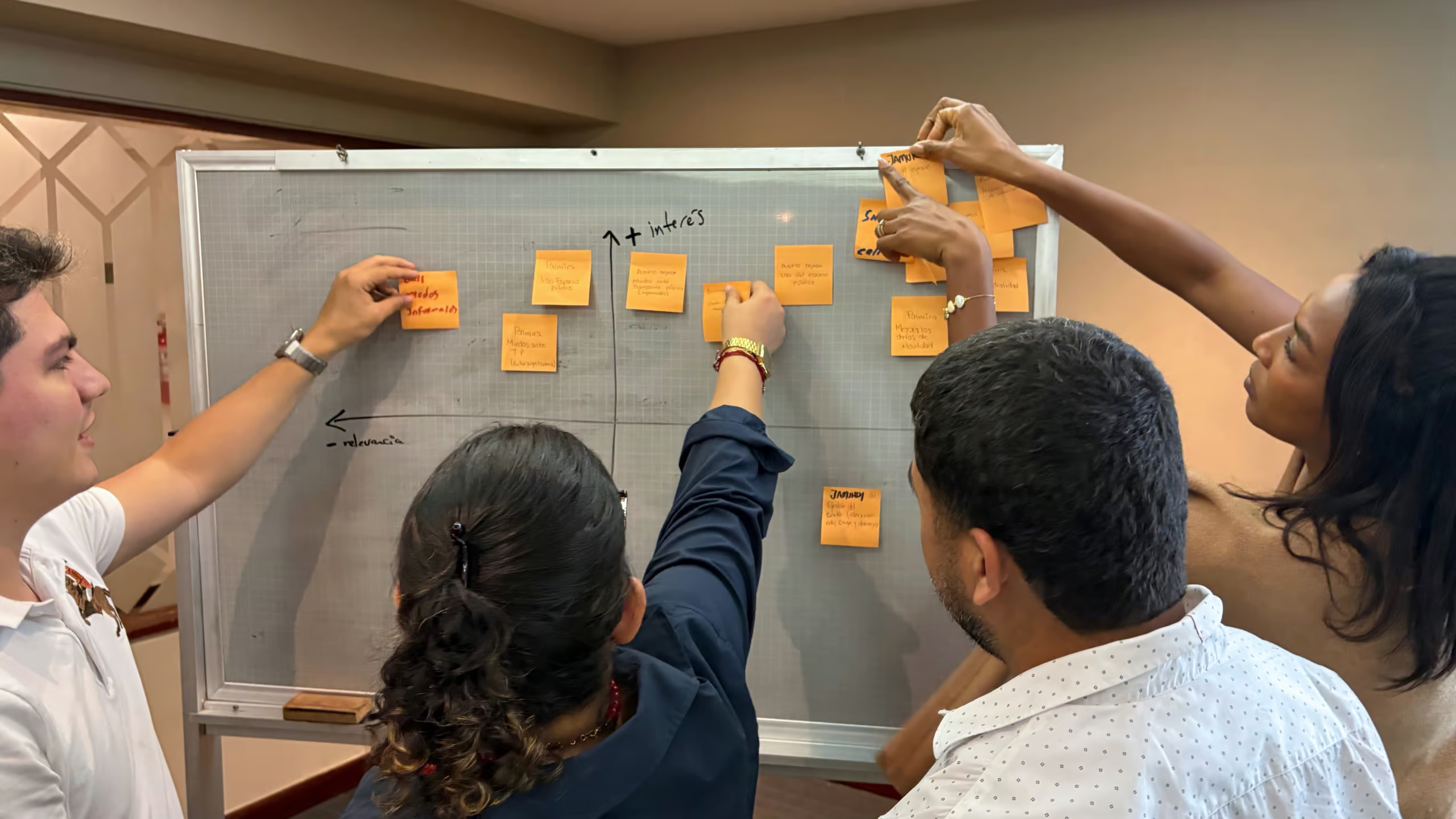
The training offered the space to structure ideas, compare approaches and agree on shared priorities. And since mobility does not stop at municipal borders, neither did the conversation: participants from six municipalities worked side by side on solutions for the region as a whole.
Over two days, short inputs alternated with hands-on work. Facilitator Carlos F. Pardo, founder of sabidurAI, showed how digital tools, open data and open standards are changing mobility planning – and why open-source software can often do the job of expensive licences. Then it got practical: what data is already out there? An inventory of 36 mobility data sources in Cali showed how much the region can already build on. A catalogue of 46 platforms and services gave participants a toolbox to choose from.
“We got to know the options for digitalisation, the tools behind them and how to use them to strengthen our own capacities.”
– Workshop participant
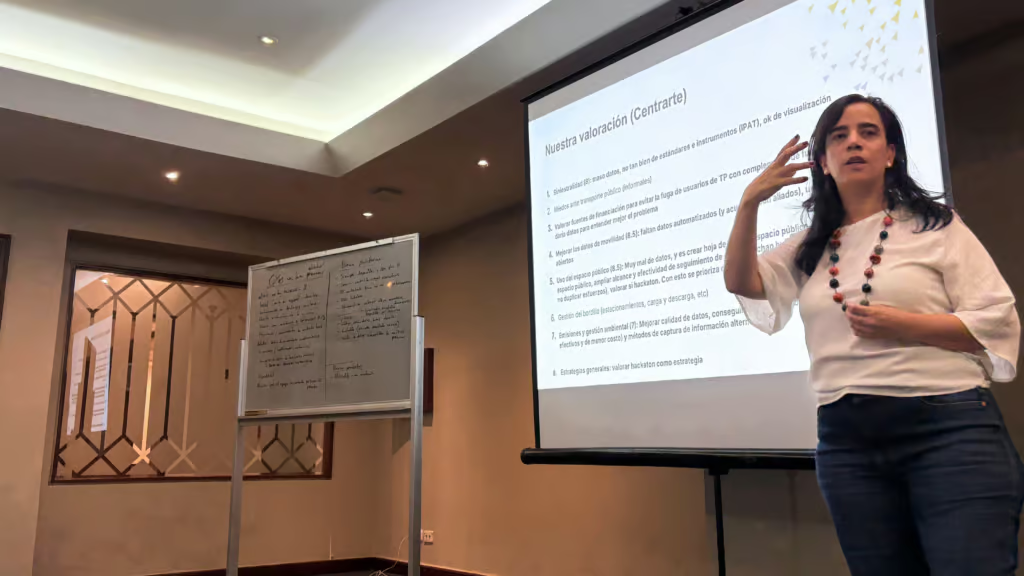
Juanita Concha Rivera (CENTRARTE, Movamos Región) presents the platform’s assessment of the region’s data priorities.
Four priorities, four first drafts
In alternating sessions with the CENTRARTE team and the wider group, participants agreed on four topics to take forward:
- Road safety: improving the quality and reliability of traffic crash data
- Mobility patterns: building a sound regional database on how people travel
- Public space: using data to plan and manage streets and public spaces
- Public transport: understanding ridership and exploring land value capture as a financing tool
For each topic, the groups turned their ideas into first terms of reference – a concrete starting point to move from plans to projects. Just as importantly, the training built a shared understanding across institutions of what good data solutions look like. Further topics, such as emissions and informal transport, are already on the radar.
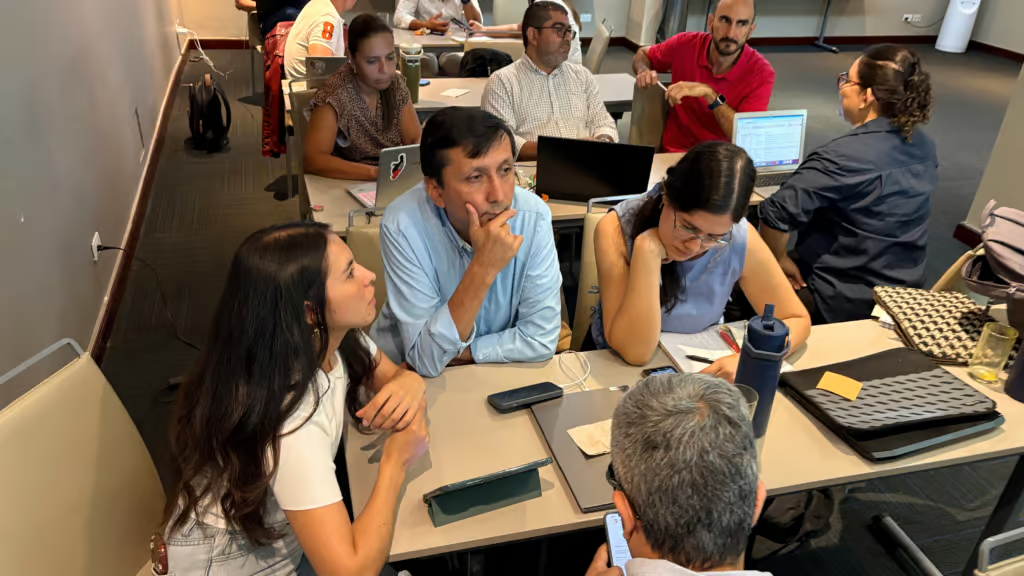
Participants from six municipalities worked side by side on solutions for the region as a whole.
Digitalisation starts with everyday work
Smart mobility is less about flashy technology than about solid foundations – and these are laid in the daily work of public institutions. Every crash report, traffic count or bus schedule recorded in a municipal office is a building block, and every dashboard, model or app is only as good as the data behind it. That is why Cali’s inventory of 36 data sources matters: knowing which data exist, how reliable they are and how to keep them up to date is where digitalisation really starts. Open data and open standards then make this information shareable across institutions, while open-source tools offer powerful and affordable ways to put it to use.

Small-group work turned ideas into first draft terms of reference.
“It was not a vague talk without results – we learned how to turn our work into concrete documents.”
– Workshop participant
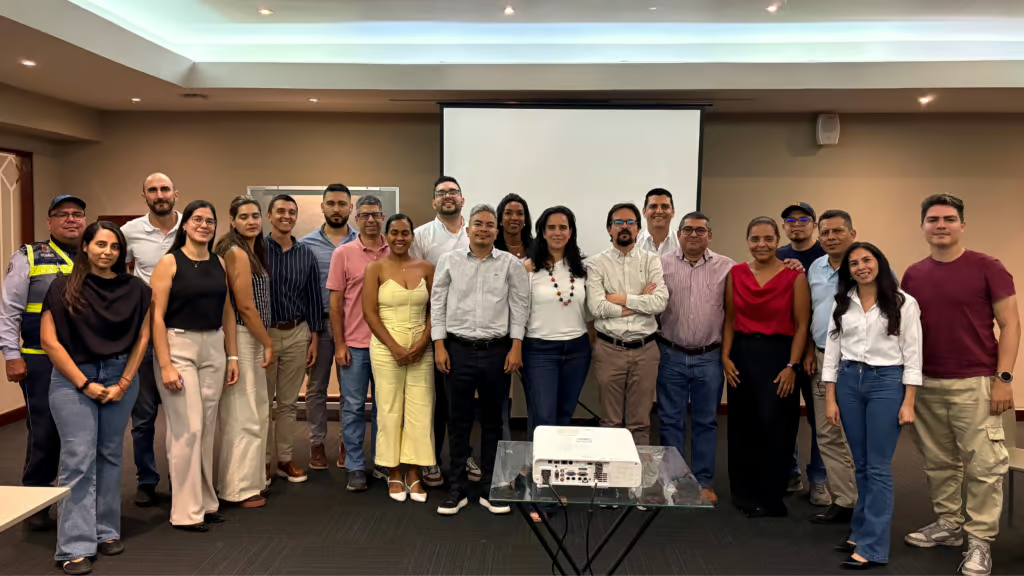
The participants of the two-day training in Cali.
Want to get started yourself?
The online course Data Fundamentals for Sustainable Mobility is open to everyone and free of charge, of charge, in English and Spanish. Developed by TUMI together with Cities Forum, it runs over five weeks at two to three hours per week, and you can earn a free certificate.
The course shows how to collect, analyse, visualise and govern transport data – from GTFS mapping and origin-destination data to informal transport, gender-responsive planning and open data. Lectures, expert conversations and 27 international case studies show how cities around the world put data to work. An excellent foundation for anyone who wants to make data work for sustainable mobility in their own city.
Sign up now » [English] | [Español]