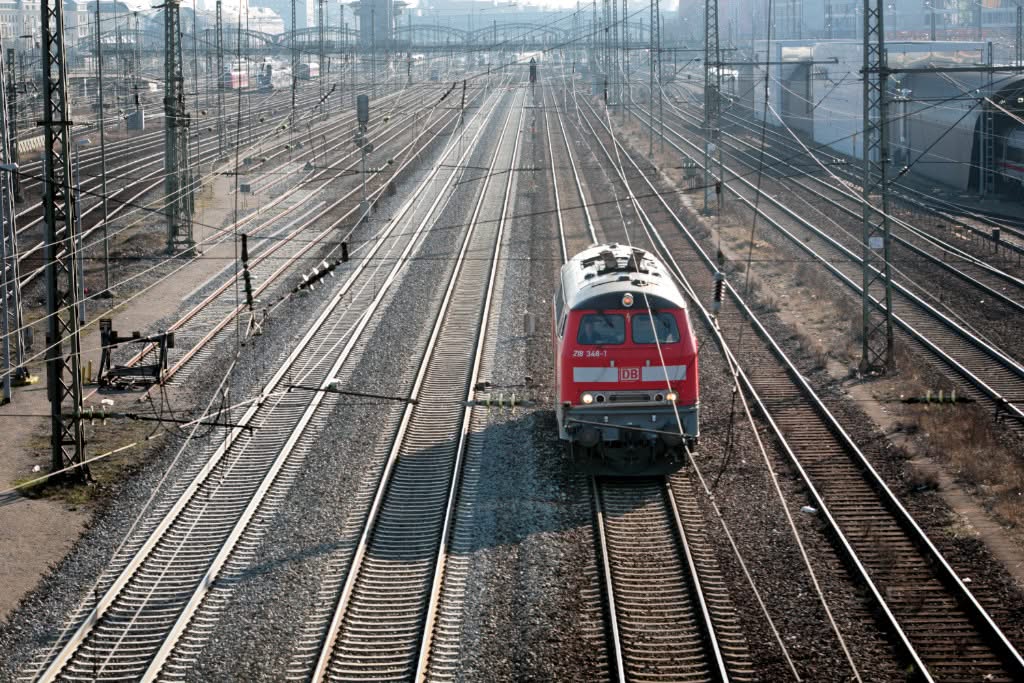
Roads usually get the attention when people talk about trade and transport corridors. They are visible, flexible, and reach almost everywhere. But it is rail that makes the real difference when it comes to moving large volumes of goods and people over long distances in a reliable, affordable and low-emission way.
High capacity, high resilience
Railways combine very high transport capacity with lower costs over long distances. They are also more resilient than roads, which suffer from congestion, wear, and climate-related disruption. For growing cities and for freight corridors connecting inland regions to ports and markets, this means a more stable and predictable mobility system. That stability is something modern, supply chain dependent economies simply cannot do without.
Lower costs, higher competitiveness
Rail lowers logistics costs across the value chain, and that has real economic consequences. Cheaper transport means more competitive products on regional and global markets, better margins for producers, and a stronger case for industrial investment. In this sense, rail works as a lever for economic development, not just a way to move goods around.
Strategic infrastructure for trade
Inside economic corridors, rail plays a role that goes beyond logistics. It becomes strategic infrastructure for trade, regional connectivity and supply chain security. A well-functioning rail corridor connects fragmented markets, reduces the friction of cross-border trade, and helps a territory move from being a simple transit point to becoming a hub for production and value creation.
Skills and partnership: the less visible side of rail
Rail development requires long-term investment in skills: engineers, technicians, operators, regulators. Without this, infrastructure deteriorates quickly and stays dependent on outside expertise. It also needs strong private sector participation in operations, maintenance, and industrial supply chains. In practice, this means building governance and financing models that make projects genuinely bankable, not just laying track.
A key piece of the energy transition
Rail has one of the most direct climate roles in the transport sector, since it enables a large-scale shift toward low-carbon mobility for both freight and passengers. This matters even more today, as climate and development agendas become more connected. Transport corridors are now expected to deliver on several fronts at once, from climate to economic development to inclusion, and rail is one of the few types of infrastructure that can respond to all of them at the same time.
What holds rail development back
Rail corridors often underperform, and usually not because of a single bottleneck but because of several constraints that reinforce each other:
- Infrastructure gaps: missing links, and interoperability issues between gauges and digital systems
- Governance gaps: standards that are not harmonised across countries, and weak corridor institutions
- Political economy: political cycles that are much shorter than the time needed to see a return on rail investment
- Finance gaps: limited project bankability and restricted access to credit for smaller companies in the supply chain
- Social inclusion risks: impacts on vulnerable groups and local communities that need careful management
- Data gaps: digital systems that are not interoperable across borders or operators
Closing these gaps requires an integrated approach. Governance, skills, financing and digital systems all need to be developed alongside the tracks. This combination, more than the physical infrastructure alone, will decide the future of rail corridors.