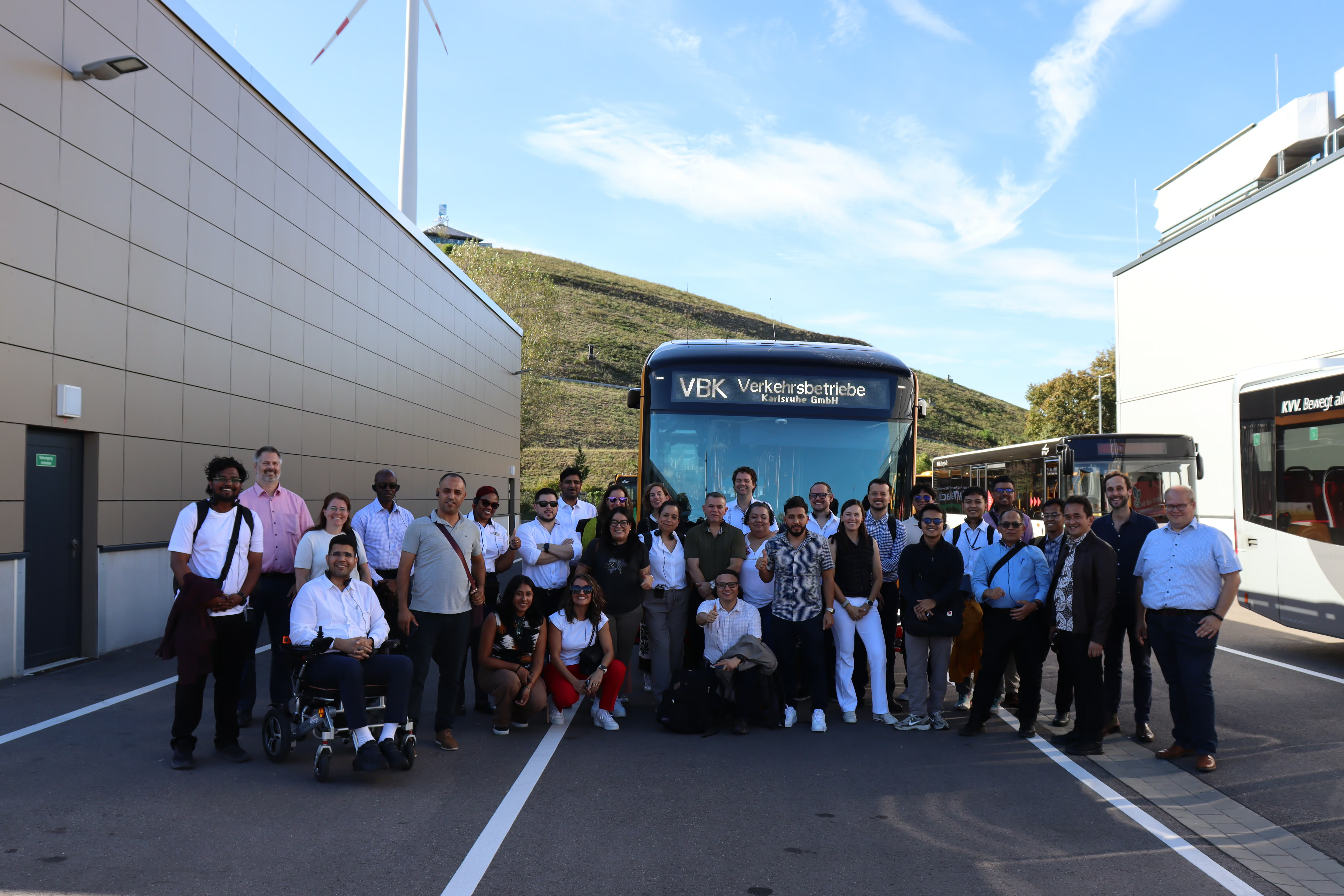
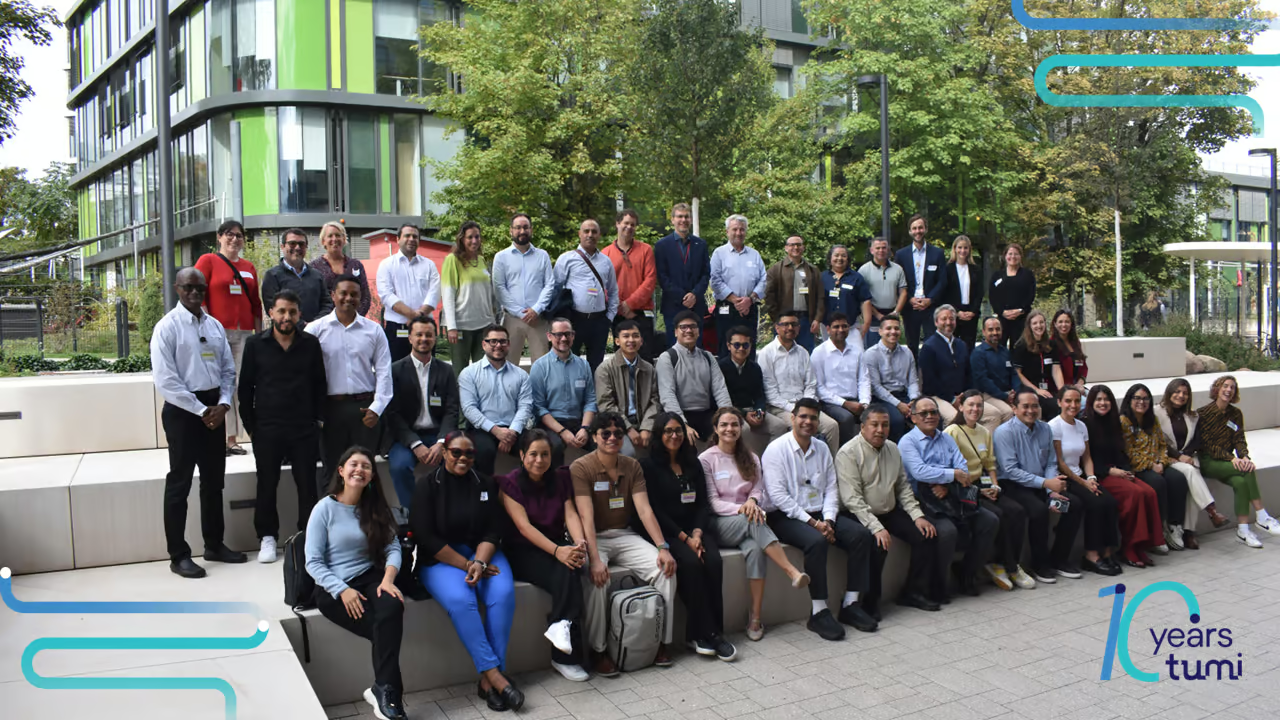
How can cities accelerate the transition to zero-emission public transport? In September 2026, the Transport and Urban Mobility Initiative (TUMI) and the E-Motion Project brought together 50 mobility practitioners and decision-makers from 14 countries in Africa, Asia and Latin America to Germany for a week of technical visits and peer exchange.
Electrifying public transport is about much more than putting electric buses on the road. It requires the right technology, reliable charging infrastructure, sound planning, sustainable financing and effective fleet operations. How these elements come together in practice was at the heart of the TUMI and E-Motion E-Bus Study Tour in Germany, held from 14 to 18 September 2026. It was also one of the highlights in the run-up to TUMI’s 10-year anniversary conference in Berlin on 21 September.
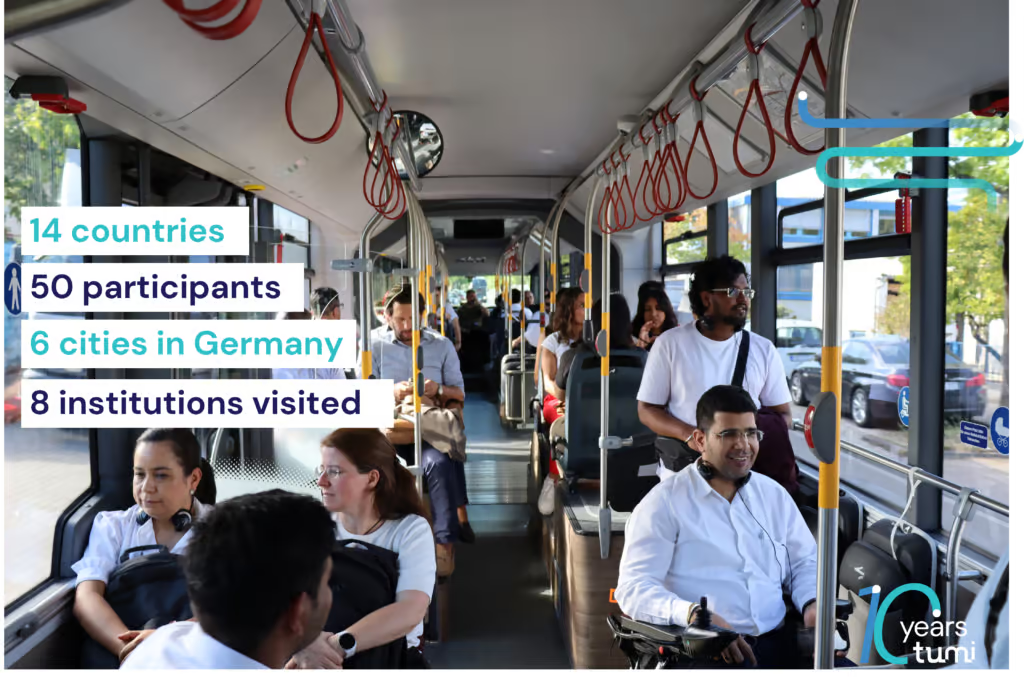
Over the course of the week, the international delegation visited six cities and eight institutions across Germany, gaining first-hand insights into the country’s experience with electric bus deployment and sustainable urban mobility. The programme combined technical site visits, discussions with industry representatives and public transport operators, and opportunities for participants to exchange experiences from their own cities and countries.
From technology to daily operations: inside the e-bus ecosystem
The study tour covered the full picture of electric public transport, from vehicle technology and charging infrastructure to fleet management, procurement and day-to-day operations.
The programme opened at GIZ in Eschborn, where participants shared where their countries and cities stand, what is proving difficult and what they are prioritising. That exchange set the tone for a week of discussion and peer learning, since every city is taking its own route towards zero-emission mobility.
At ESWE Verkehr in Wiesbaden, the delegation saw what it takes to run a large electric bus fleet. With around 120 e-buses in service, which cover roughly 45% of the operator’s service output, ESWE shared its experience with fleet management, depot charging and the introduction of articulated electric buses.
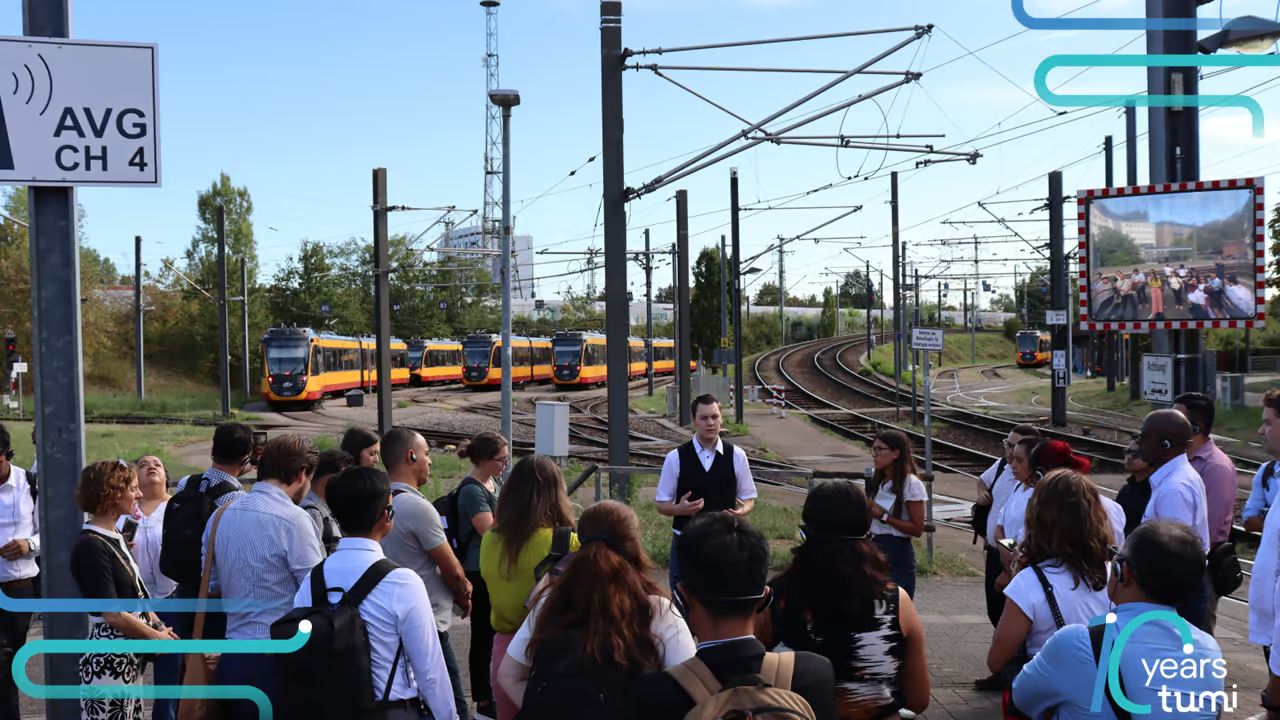
At Verkehrsbetriebe Karlsruhe (VBK), the group visited a newly built depot designed from the ground up for the city’s 48 e-buses. It has its own maintenance facilities and a space-saving, roof-mounted charging system. After a ride on an e-bus, participants also took a closer look at the ‘Karlsruhe Model’: tram-trains that run on both the city’s tram tracks and the regional rail network. Passengers can travel from surrounding towns straight into the city centre without changing, which has made it a reference for integrated regional public transport.
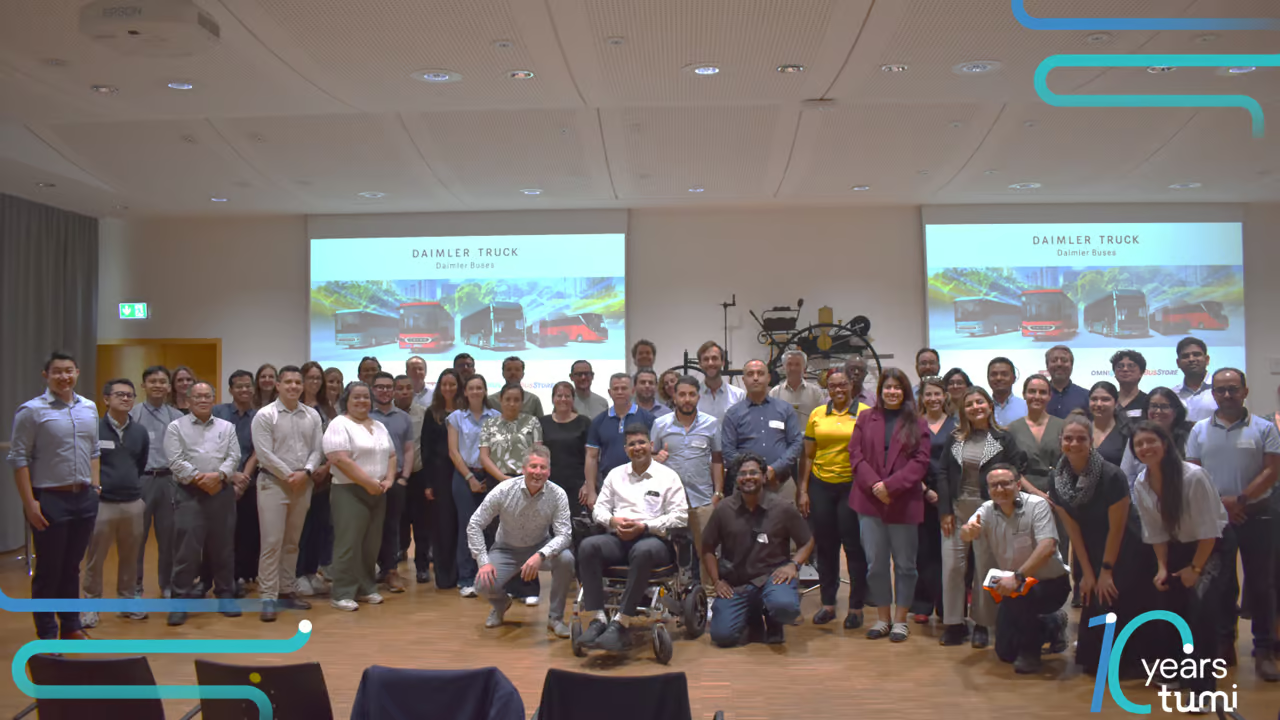
Another highlight of the tour was a visit to Daimler Truck AG and its subsidiary Daimler Buses in Mannheim, where the delegation got an industry view of how electric bus technology is developing and where international markets stand. Discussions covered product development, market readiness, global deployment and the challenges of scaling up electric bus solutions. Participants also toured the production site and tried the Mercedes-Benz eCitaro during a dynamic test drive.
At Stadtwerke Offenbach, the group looked at one of the hardest practical problems in urban transit: how to park, charge and manage an electric bus fleet when depot space is tight. The operator implemented a space-saving roof-mounted pantograph charging strategy, with enough charging points to further expand its electric fleet. It is complemented by an opportunity charging area in the city centre, which the group toured on a Solaris electric bus. The session was a good reminder that the limiting factor is often not the bus but the available land and grid connection.
The programme also included visits to the transport authority of Frankfurt, traffiQ and the transport association of the metropolitan region, Rhein-Main-Verkehrsverbund (RMV), where participants explored public transport planning, coordination and procurement structures, as well as learned about pilot projects which use autonomous electric vehicles to feed high-capacity transport services in urban centres.
The last operator visited by the group was DB Regio Bus Mitte, where the proximity to an electrified train line greatly facilitated grid connection. As part of the Deutsche Bahn group, DB Energy is a key ally to the successful electrification of this operator’s fleet.
The final visit took the group to INIT SE in Karlsruhe, a company that develops software and hardware for public transport, such as planning, charging management and ticketing systems. INIT showed how digital tools support modern public transport, including intelligent fleet management, charging optimisation and the use of data to make operations more efficient.
Together, the visits showed that electrifying public transport works only when everything is planned as one system: vehicles, infrastructure, digital tools, transport planning and daily operations.
Beyond technology: learning through international exchange
The study tour was built around mutual learning: Germany shared its experience, and the participants brought theirs for a two way exchange. Cities across Africa, Asia and Latin America have already made significant progress on sustainable public transport, including electric bus programmes, and their experience is an important part of the global transition.
Bringing together practitioners and decision-makers from 14 countries made it possible to compare approaches, discuss common challenges and explore which solutions could work locally. Participants gained new insights into vehicle technologies, charging systems and digital solutions, while German institutions and companies learned more about the needs, market conditions and implementation challenges in emerging e-bus markets. This exchange matters all the more as cities move from individual pilot projects towards large-scale deployment of zero-emission bus fleets.
No one-size-fits-all approach
A key takeaway of the week was that there is no universal blueprint for electrifying public transport. Cities start from different conditions, from financing and electricity infrastructure to depot space, regulation and the structure of the transport market. What works in one place cannot simply be copied to another. Hearing directly from practitioners, including about the problems they ran into along the way, showed what it takes to adapt solutions to local needs.
Strengthening international cooperation
By connecting public authorities, transport operators, development partners and the private sector, the joint TUMI and E-Motion study tour helped build the knowledge, partnerships and capacities needed to turn ambitions into implementation. The next step is to take the insights and connections from Germany back to the participating countries and turn them into concrete action.
A special thank you goes to all participating delegates from Argentina, Brazil, Colombia, Costa Rica, Dominican Republic, Ecuador, Germany, India, Indonesia, Jamaica, Mexico, Panama, Tunisia, Uruguay. We are especially grateful to our host organisations for their openness, expertise and commitment: Daimler Truck AG (Daimler Buses), Verkehrsbetriebe Karlsruhe (VBK), Stadtwerke Offenbach, ESWE Verkehr Wiesbaden, DB Regio Bus Mitte, traffiQ, Rhein-Main-Verkehrsverbund (RMV) and INIT SE.
More on TUMI’s work on electric buses: TUMI E-Bus Mission
Free TUMI online course on electric buses: Electric Buses | atingi
About GCF E-Motion: The programme “E-Motion” is funded by the Green Climate Fund (GCF), with CAF – Development Bank of Latin America and the Caribbean and the French Development Agency (AFD) serving as the accredited entities. Technical implementation is led by the Deutsche Gesellschaft für Internationale Zusammenarbeit (GIZ) GmbH, which works closely with public and private partners to ensure the effective delivery of investments and technical assistance. Co-financing is provided by the International Climate Initiative (IKI) of the German government in the context of the Mobilize Net Zero project.